

The Social Network, for many, is one of the greatest movies made this century. Penned by Aaron Sorkin and helmed by David Fincher, the movie is a masterful character study of one of technology’s most enigmatic figures - Mark Zuckerberg. With Jesse Eisenberg and Andrew Garfield at their absolute best, it truly was “the stars aligned” and audiences were blessed with its result.
Flash forward 16 years.. The Social Reckoning is out and only one of those stars is back out in the sky tonight. Sorkin is back with the script but is also in the director’s chair, something he has done a few times before with Being the Ricardos, The Trial of the Chicago 7, and Molly’s Game. Gone are Eisenberg and Garfield, enter Jeremy Strong as the current day Mark Zuckerberg, and Jeremy Allen White and Mikey Madison as Jeff Horwitz and Frances Haugen, the investigative journalist and Facebook data scientist turned whistleblower who expose years of intentional malpractice.
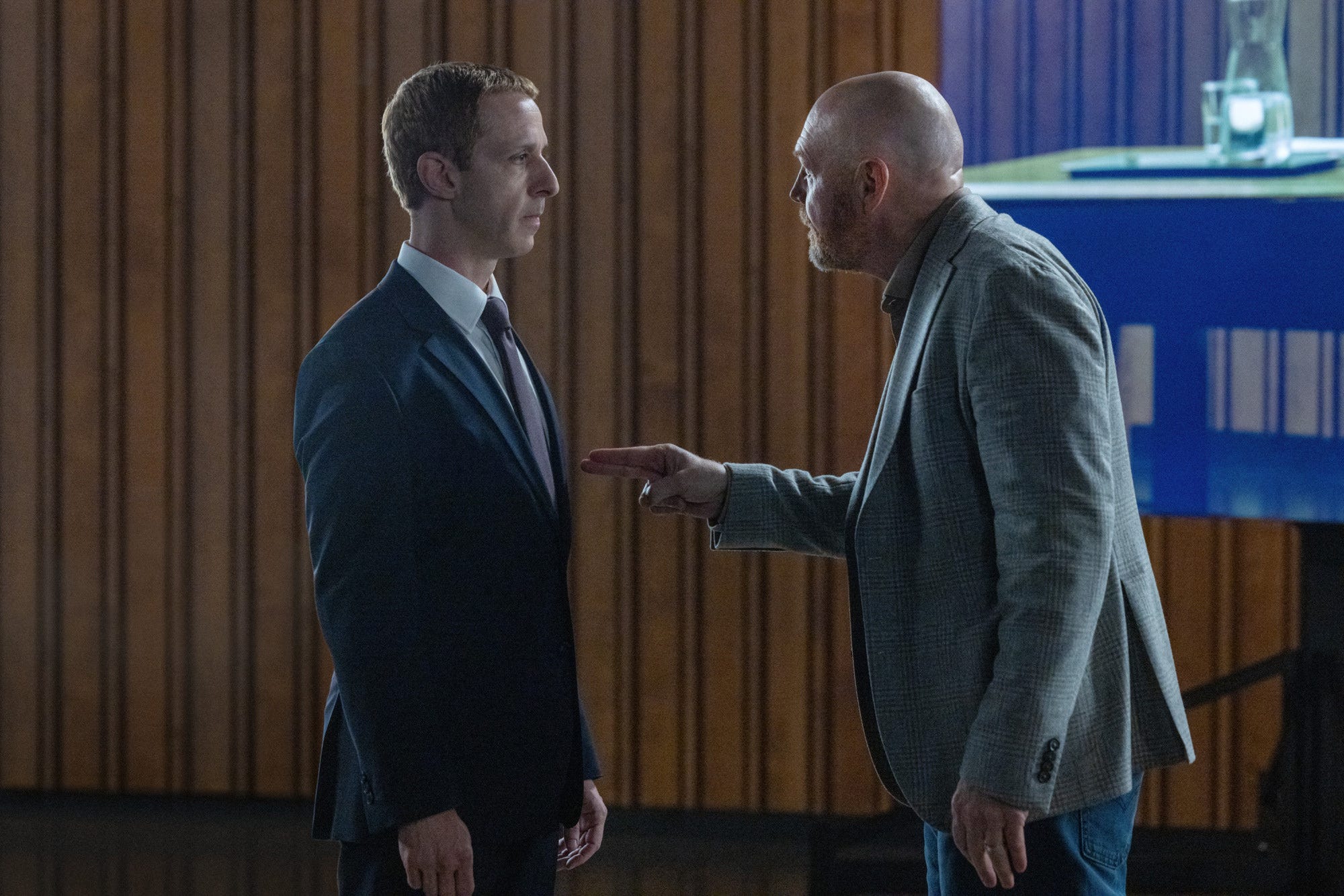
I will try my best to refrain from comparisons to The Social Network because that is a far superior film in almost every aspect. Looks, feel, performances, writing and direction, were all vastly better, which begs the question, why now for a sequel? I found The Social Reckoning to lack a lot of the plot nuances of the first, and overall harbors a feeling more personal and spiteful. It felt like Sorkin, in all the years since the first film, has held a grudge towards Facebook and Zuckerberg and let loose with his script, even writing himself into the story as a fictionalized stand in for Roger McNamee, the Silicon Valley VC and at one point close friend of Zuckerberg prior to falling out, played by Bill Burr in the film.The interactions between Garrigan and Zuckerberg felt, as loudly as possible, Sorkin venting frustrations with Facebook, specifically the moderation (or lack thereof) of political advertisements containing misinformation. These scenes were my favorites, where I found the back and forth between Burr and Strong to be entertaining, which is Sorkin’s specialty, dating all the way back to his work on The West Wing.
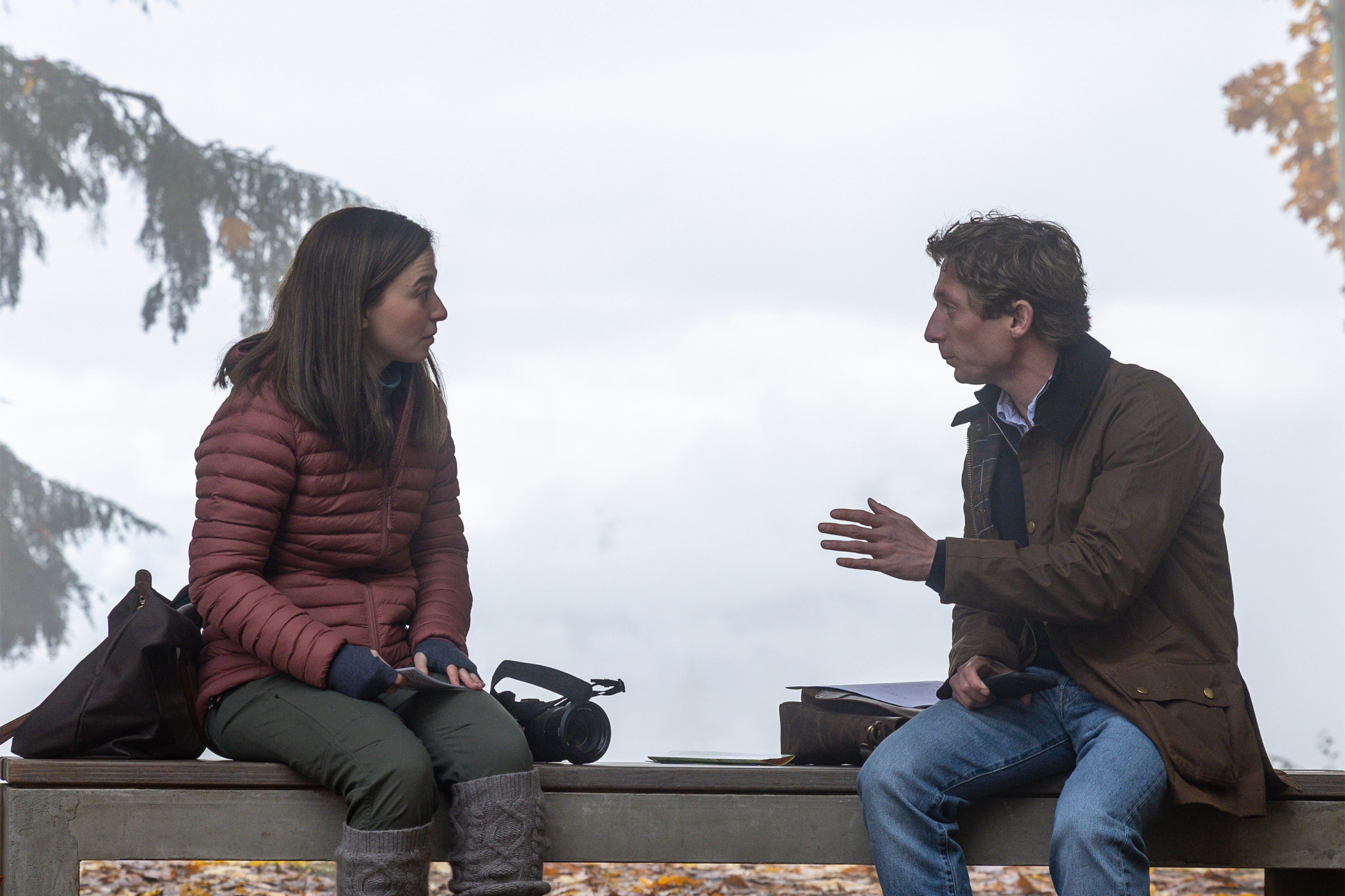
The other half of this story focuses on journalism as Jeremy Allen White tracks down evidence which would become the “Facebook Files” all with the reluctant help of Mikey Madison. I did find this to be the less enjoyable of the storylines, as it tries to be its own All the President’s Men or Spotlight but misses on some core pieces that made those movies work. For starters, and this is more a matter of the circumstances, Horwitz only has one source; Haugen. So instead of watching him work through multiple sources and follow a trail of leads, this plotline boils down to him trying to gain her trust and her becoming disillusioned enough with what she’s seen at Facebook to agree to help him. It’s not the most cinematic thing to have these two people keep talking with one of them drip-feeding information to the other.
That could have worked if the characters had been interesting, but both Horwitz and Haugan equally fall flat. There is no moment in the movie where we get to know who each is beyond their jobs. The only semblance of depth with Horwitz is that he’s tech-illiterate. How Sorkin portrayed Haugen and directed Madison in particular is one of this movie’s biggest malpractices. All we have to go off with her is that Haugen is antisocial and liked Facebook because she thought the sense of community was a net positive. She lacks agency, with her only purpose in the movie being to aid Horwitz on his quest to expose Facebook. Her “growth” comes within where she quits Facebook, applies for whistleblower status/protection, and decides to testify in front of Congress. She is shot provocatively for some reason numerous times. It’s clear the movie had no plan to make her a real person, which is a shame because the real Frances Haugen deserved much more shine than this
.
Jeremy Strong as Zuckerberg isn’t much better, but we can at least see some of his motivations working behind the lifeless, mechanical eyes of his. At this point in his life and career, he is driven by the bottom line, willing to let people suffer so long as even 1% of his engagement isn’t lost. He sees himself as a “free speech absolutist” in a hyper political time, with Facebook being nothing but the playing field, yet can’t seem to realize or doesn’t seem to care about the weight of each interaction on his user’s life. The performance itself is incredibly robotic, which isn’t surprising given the character and Strong’s tendency to go method, but at points it’s a bit laughable how much he needs to be coached into appearing human.
Final Thoughts
The Social Reckoning is a rather disappointing film, especially with the inescapable comparison to its original film. Writer/Director Aaron Sorkin is not able to flesh out his characters beyond the talking points he wants to expound upon, and the entire movie just feels like a big, bloated, docudrama. Sometimes the stars align and you have a perfect film, and other times, it’s a clear sky at night.